why i rarely recommend open shelving in kitchen & joinery design
Open shelving has been everywhere in interiors for years. Scroll through Pinterest or Instagram and you’ll see beautifully styled kitchens with floating timber shelves, neatly stacked ceramics, a few carefully chosen cookbooks and perhaps a trailing plant for good measure.
And visually, I understand the appeal.
But from a practical point of view? I’m not always convinced.
Personally, I tend to avoid open shelving unless there is a very good reason for including it. While it can look beautiful, it also introduces something many people don’t consider during the design process: maintenance.
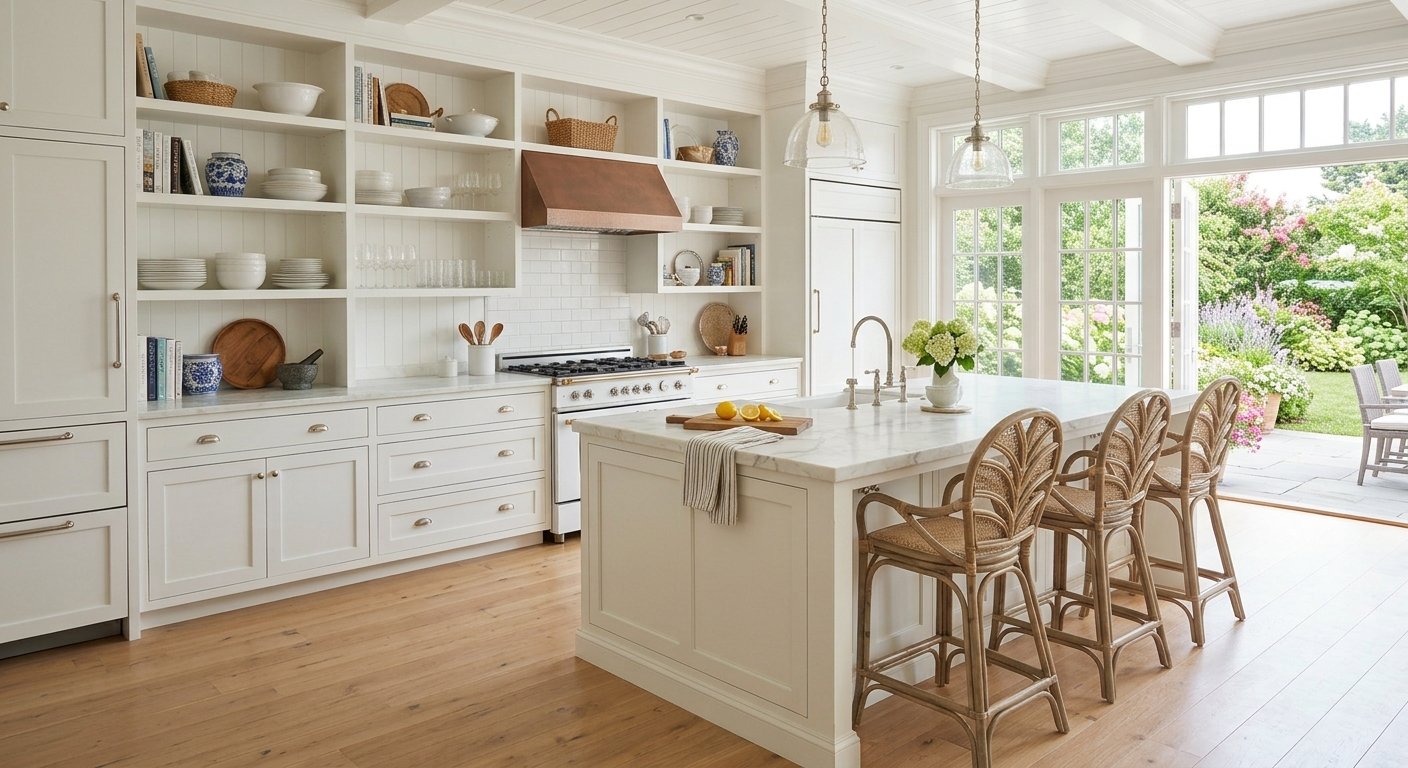
Kitchens with with open shelving & professionally styled can look very aesthetic. Image AI assisted.
1. What are the benefits of open shelving in a kitchen?
Don’t misunderstand me, it’s not all bad.
There are situations where open shelving can work very well.
The key is to use it selectively.
Open shelves can work beautifully in a home coffee station because the items stored there are frequently used and within easy reach.
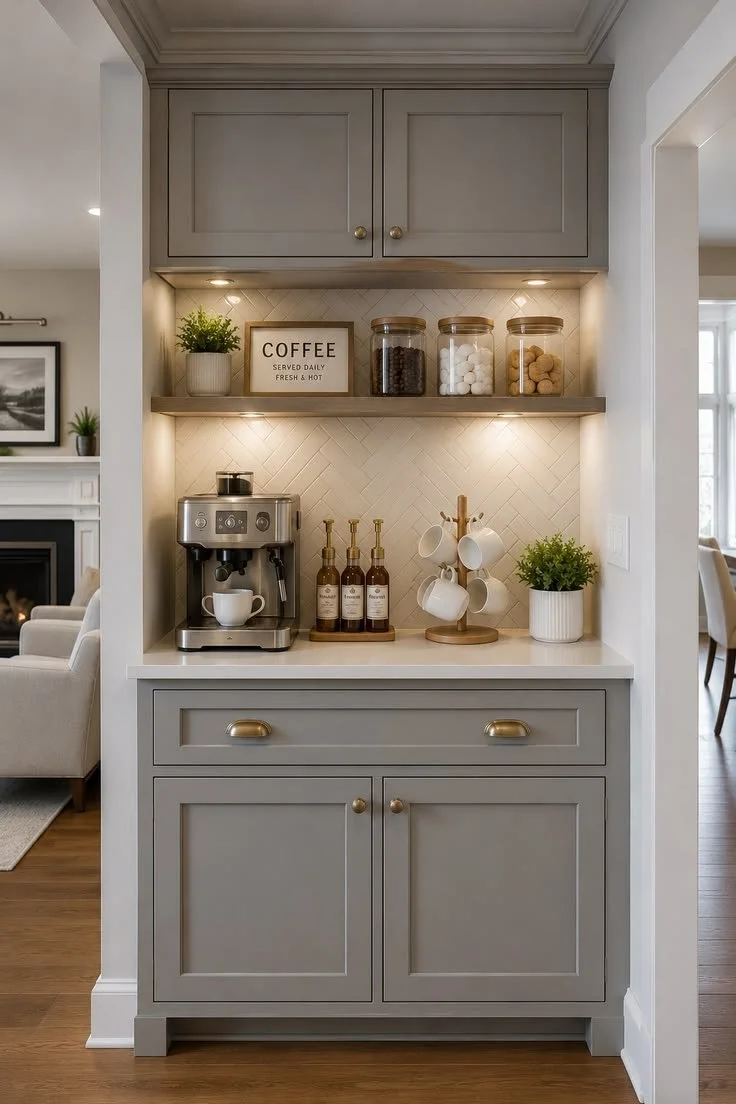
Home Coffee Station with Open Shelving. Image AI assisted.
They can also work beautifully as a feature in a home bar where attractive bottles and glassware naturally become part of the design.
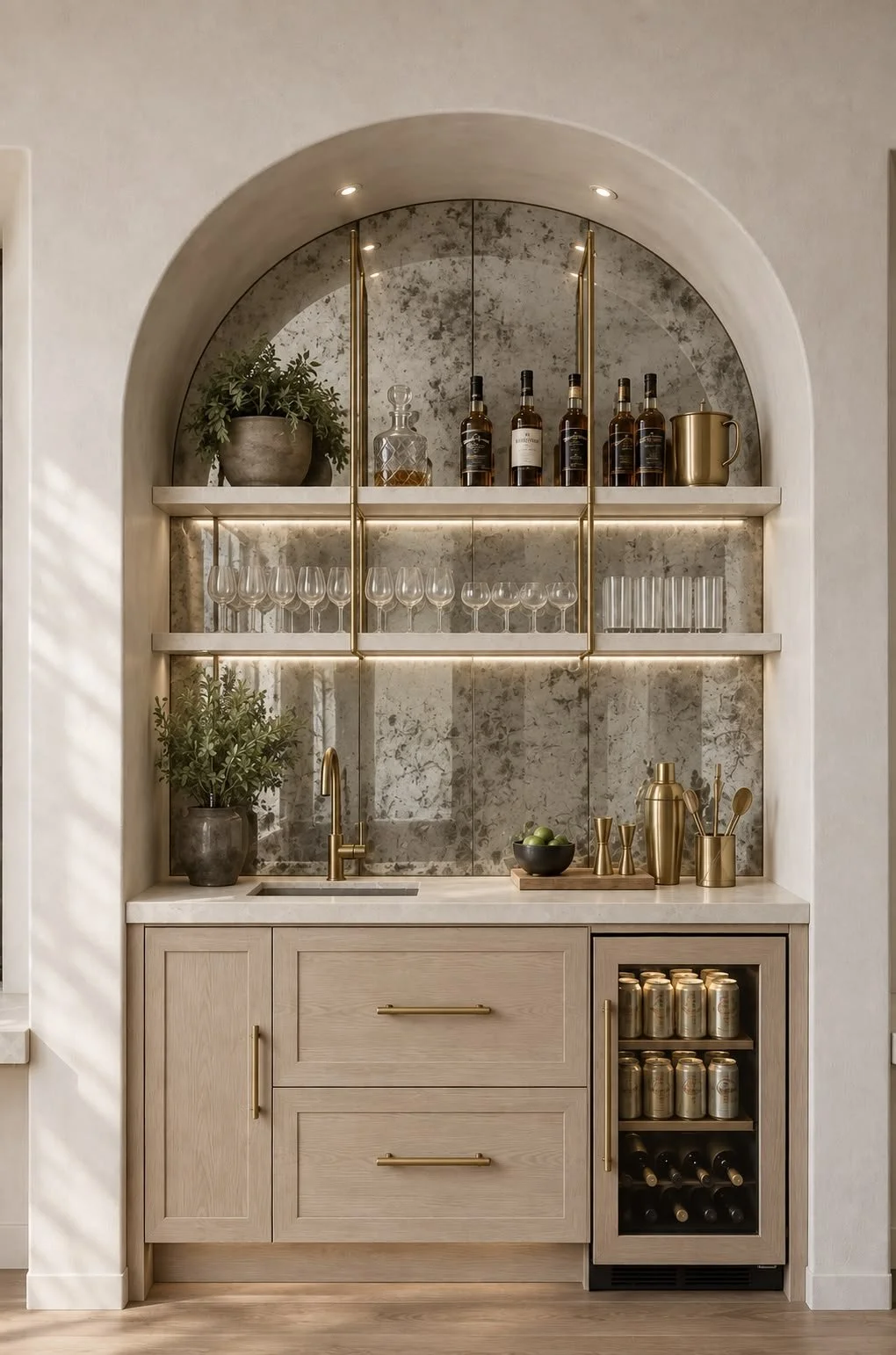
Home Bar with open shelving as a feature in design. Image AI assisted.
One of the main advantages is that open shelves can make a kitchen feel lighter. In a smaller room, replacing a solid bank of overhead cupboards with a shelf can prevent the cabinetry from visually dominating the space.
Open shelving can also add warmth and personality as you add your own personal touches in terms of decorative pieces. This can be particularly effective in kitchens where you want the space to feel more relaxed and less utilitarian.
However……
2. The Downside Nobody Talks About Enough : DUST
This is the main reason I am cautious about using open shelving in kitchen design.
It collects dust.
In a kitchen, you can also add cooking residue, moisture and grease to the equation.
Everything displayed on the shelf needs to be cleaned, as does the shelf itself. If the objects aren't used regularly, they can quickly become another area of the home requiring maintenance.
Closed cabinetry protects its contents and hides everyday clutter.
For me, good design should make everyday life easier—not quietly add another cleaning job to your week.
3. Open Shelving Can Create Visual Clutter
There is another reality with open shelving: the images we fall in love with have usually been very carefully curated.
There might be three beautiful ceramic bowls.
Four matching glasses.
A small piece of art.
Perhaps an olive branch.
What you generally don’t see is the half-empty packet of crackers, children's drink bottles, mismatched mugs, vitamins, plastic containers and everything else real families actually need to store.
When everything is visible, everything becomes part of the design.
That means open shelving requires a degree of restraint. If you naturally enjoy arranging and editing your belongings, this may not bother you at all.
But if your shelves gradually accumulate paperwork, school water bottles and miscellaneous objects—as most homes do—closed cabinetry is much more forgiving.
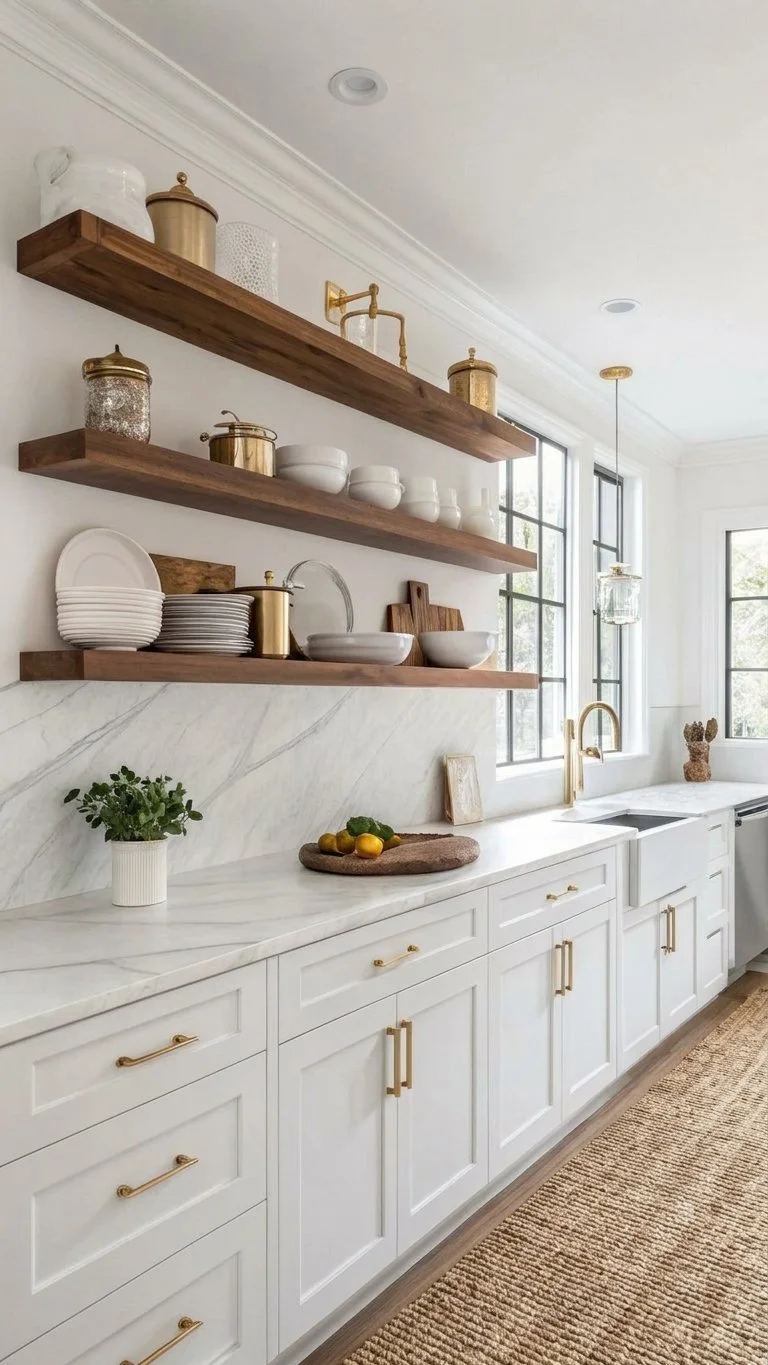
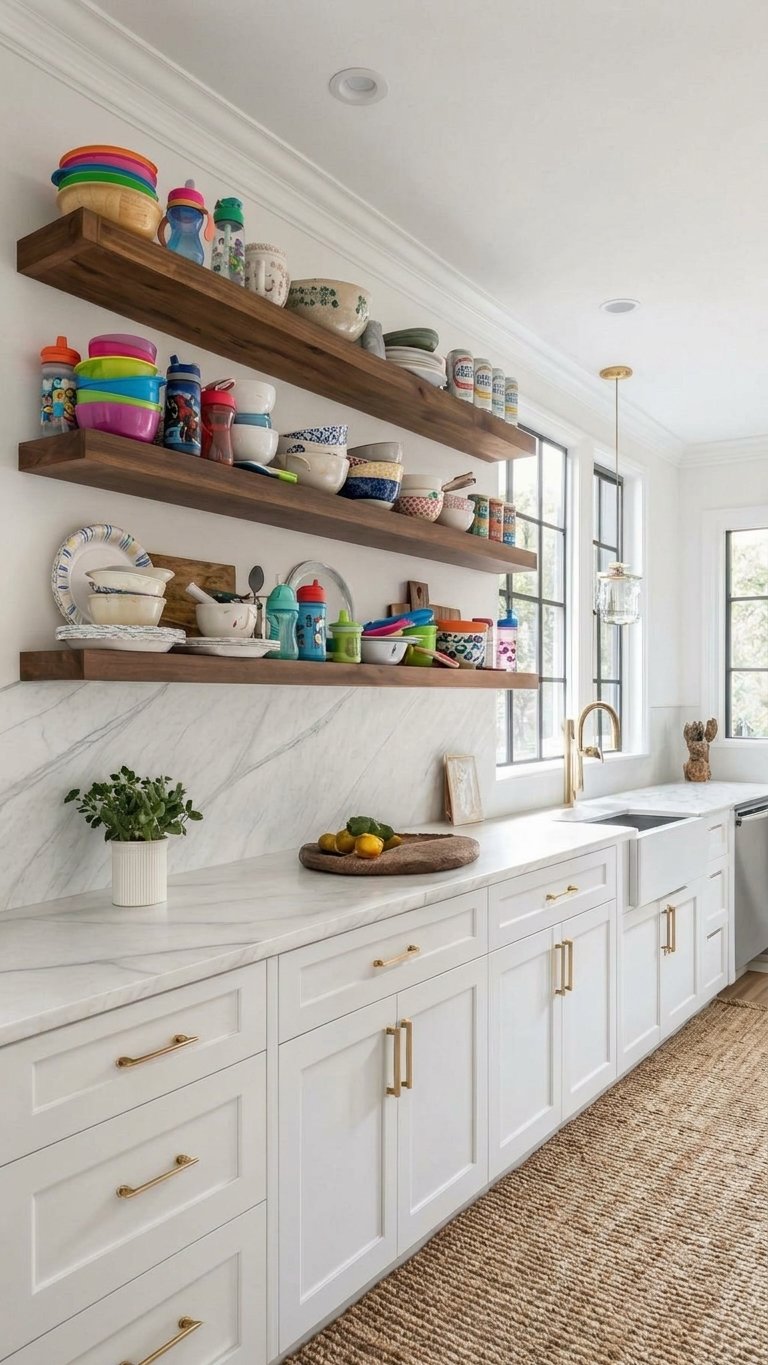
Styled for the photograph vs. the reality of everyday living.
Those beautiful open shelves you see in design magazines have been carefully curated, with every item chosen and positioned to look just right.
But everyday life isn't always so coordinated.
Before choosing open shelving, consider how it will look with the things you actually use, not just the things you want to display.
4. Are You Sacrificing Valuable Kitchen Storage?
This is one of the most salient points and is particularly important when planning kitchen joinery.
Open shelving provides storage, but it doesn't necessarily provide efficient storage.
An overhead cupboard allows you to use the full height and depth of the cabinetry while concealing its contents. By comparison, an open shelf usually needs to be styled with some breathing room around objects if it is going to look intentional rather than crowded.
5. What should you consider before adding open shelving?
Before removing cabinetry in favour of shelving, I always consider the overall storage requirements of the kitchen.
Do you have enough cupboard space elsewhere?
Where will your less attractive everyday items go?
Are you giving up useful storage purely to achieve a particular aesthetic?
In a large kitchen with generous cabinetry, one feature shelf may work beautifully.
In a small kitchen where every centimetre of storage matters, I would think very carefully before sacrificing an overhead cupboard.
6. Alternatives to Open Shelving in Kitchen Design
If you like the lightness of open shelving but don't love the practical implications, there are several alternatives.
Glass-fronted cabinetry can provide a sense of openness while offering more protection from dust.
You could also combine mostly closed cabinetry with one small feature shelf.
Another option is simply to leave some negative space.
Not every wall needs cabinetry, shelving or decoration. In fact, allowing part of a room to remain visually quiet can make the surrounding materials and joinery feel even more considered.
This is particularly important when creating timeless interiors. Rather than trying to incorporate every current design feature, I prefer to ask whether each element has a genuine purpose.
If you’re unsure how to incorporate open shelving in your home, an Interior Design - Design Advice Session could be beneficial to help resolve areas where you’re unsure how to proceed and more cost effective than a full Interior Design full scope service.
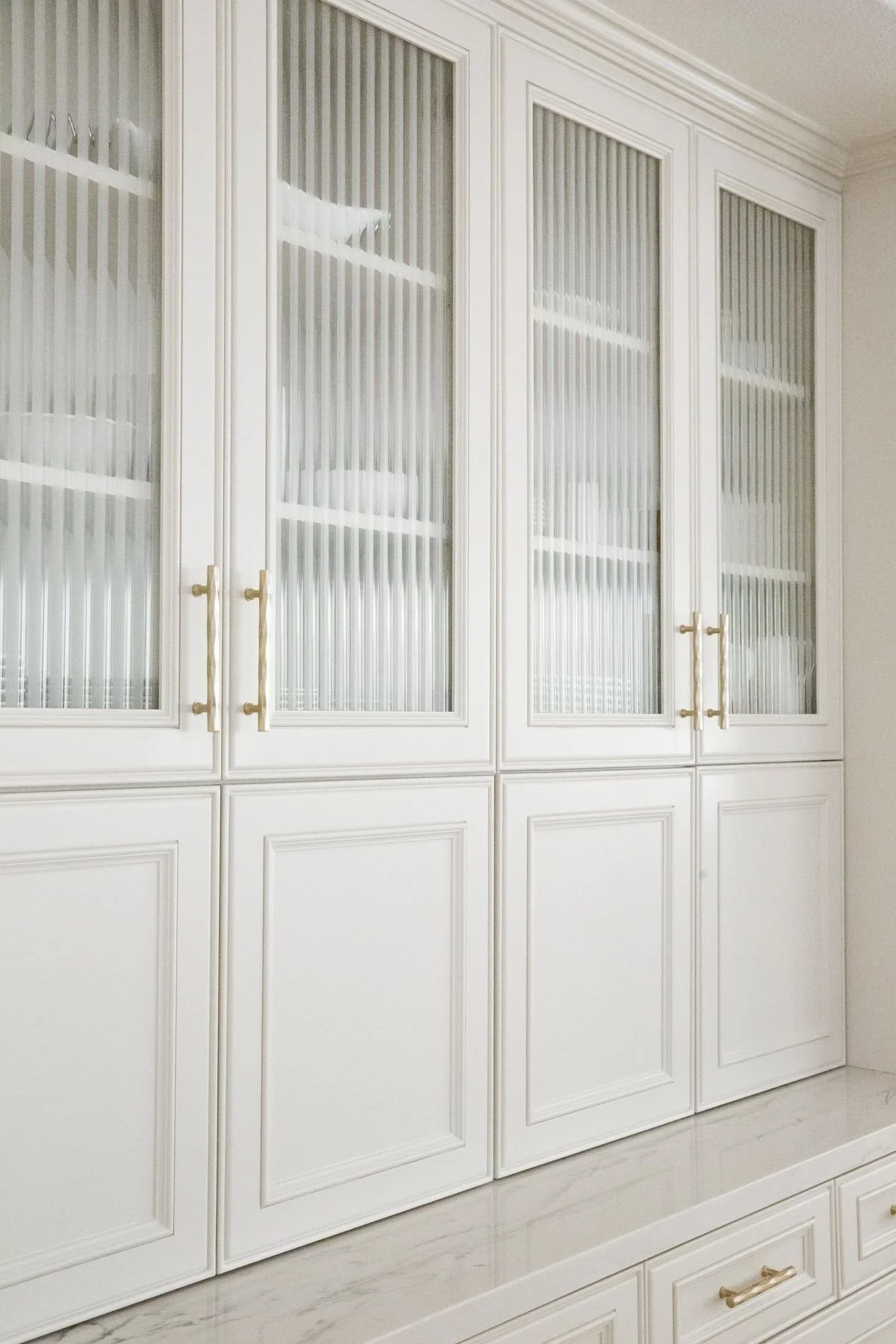
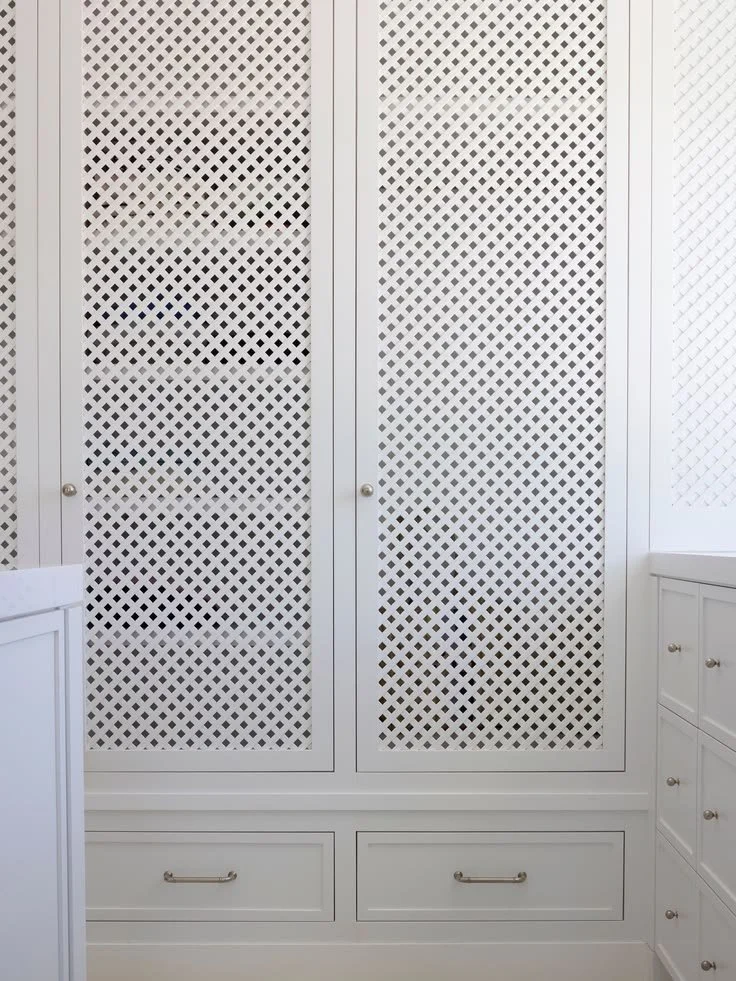
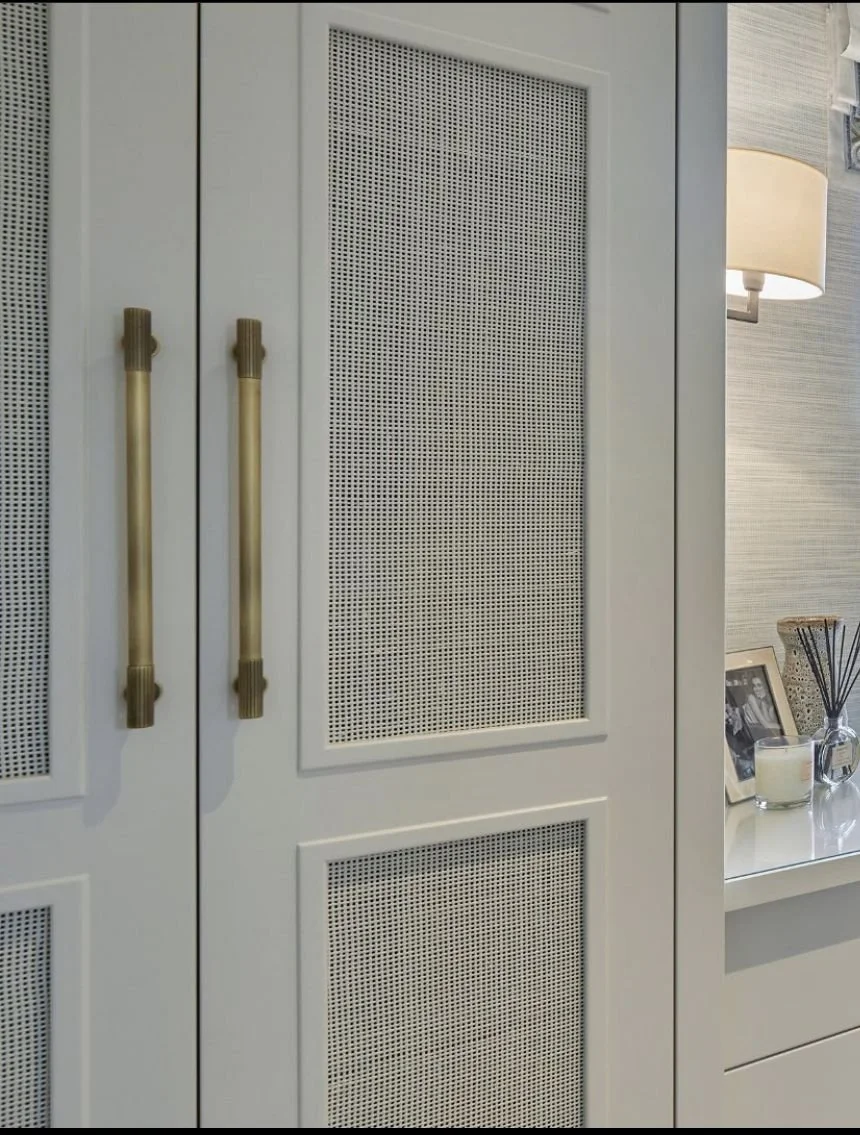
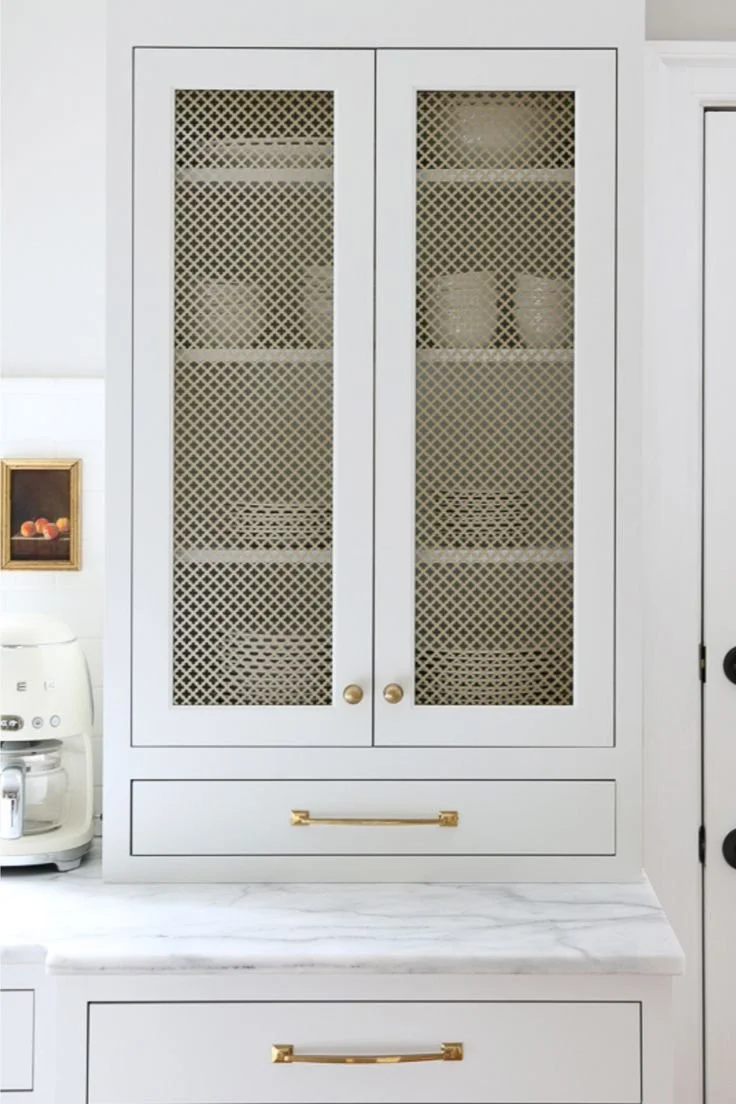
If you love the lighter look of open shelving but not the maintenance, consider fluted glass, woven or mesh cabinet inserts for example. They create a more open, decorative feel while keeping contents protected from dust and everyday grime.
7. So, should you choose open shelving?
Open shelving can certainly look beautiful.
However, beautiful and practical are not always the same thing.
If you enjoy styling, have plenty of storage elsewhere and don't mind regular cleaning, a carefully positioned open shelf may add warmth and personality to your kitchen.
If you prefer clean lines, minimal visual clutter and a low-maintenance home, closed cabinetry will usually be the more practical choice.
Ultimately, good interior design isn't about recreating an image you've saved on Pinterest.
It is about creating a home that suits the way you actually live.
So before adding open shelving to your kitchen design, ask yourself one simple question:
Do I genuinely want open shelving—or do I just like the photograph of it?
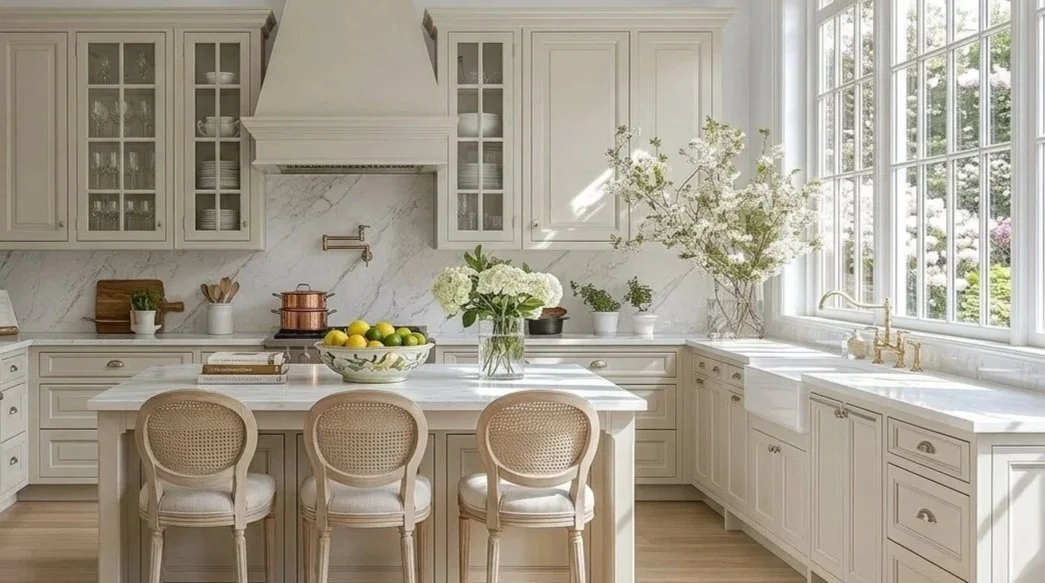
Closed cabinetry fronts, or some alternative of cabinetry insert has clean lines, is aesthetic and low maintenance. Image AI assisted.
JMS STYLE & DESIGNS’ approach to open shelving in Kitchen & JOINERY Design
As a Brisbane interior designer, I work with clients on renovations, kitchen design and custom joinery where these seemingly small decisions can have a significant impact on how a home functions day to day. My approach is always to create interiors that feel beautiful and considered, but also make sense for the people who actually live there. Trends can provide inspiration, but they shouldn't dictate a design decision that you'll be living with for years.